Agentic Spec-Driven Workflow
I last shared my agentic development workflow back in September 2025. Now, as I write this in September 2026, I have largely updated my workflow.
The highlights are that I am able to let my agents take on larger tasks. I am also seeing better results overall. I think this is due to both the better models released since September 2025 as well as this updated workflow.
Problems
Let's start with the problems that I encountered in my previous workflow.
-
Missing Requirements
The job simply wasn't getting done completely. That was the primary issue. Most of the task was usually complete. But there would often be smaller but important pieces missing. The time and effort required to make sure these were in place was often quite burdensome.
-
Scope Creep
On the other hand, the resulting pull requests contained many unexpected changes. When asked about it, the agent would often declare (with complete confidence) that these changes were a part of the original requirements. Under inspection, these changes seem to have originated from two sources: first, they happened when the agent encountered issues; second, they happened when an AI code reviewer left a review. The agent would address these issues and reviews, even if they were unrelated or not aligned with the original intent. Those changes quickly became canon as the agent lost track of its original goal.
So, what I needed was a way for the agent to keep track of what I had actually asked for. It needed to be able to tell what was in scope and, just as importantly, what was out of scope. That way, it could reject or flag anything that deviated from expectations.
That's what this workflow is all about.
Pre-Requisites
If you aren't familiar, you may want to first read about Spec-Driven Development (SDD) as this post assumes you know what that is.
Spec-driven development means writing a “spec” before writing code with AI (“documentation first”).
You may also want to read up on OpenSpec, which is the Spec-Driven Development framework I use.
OpenSpec is a lightweight and configurable framework for creating and managing software specifications. https://openspec.dev/
Three Phases
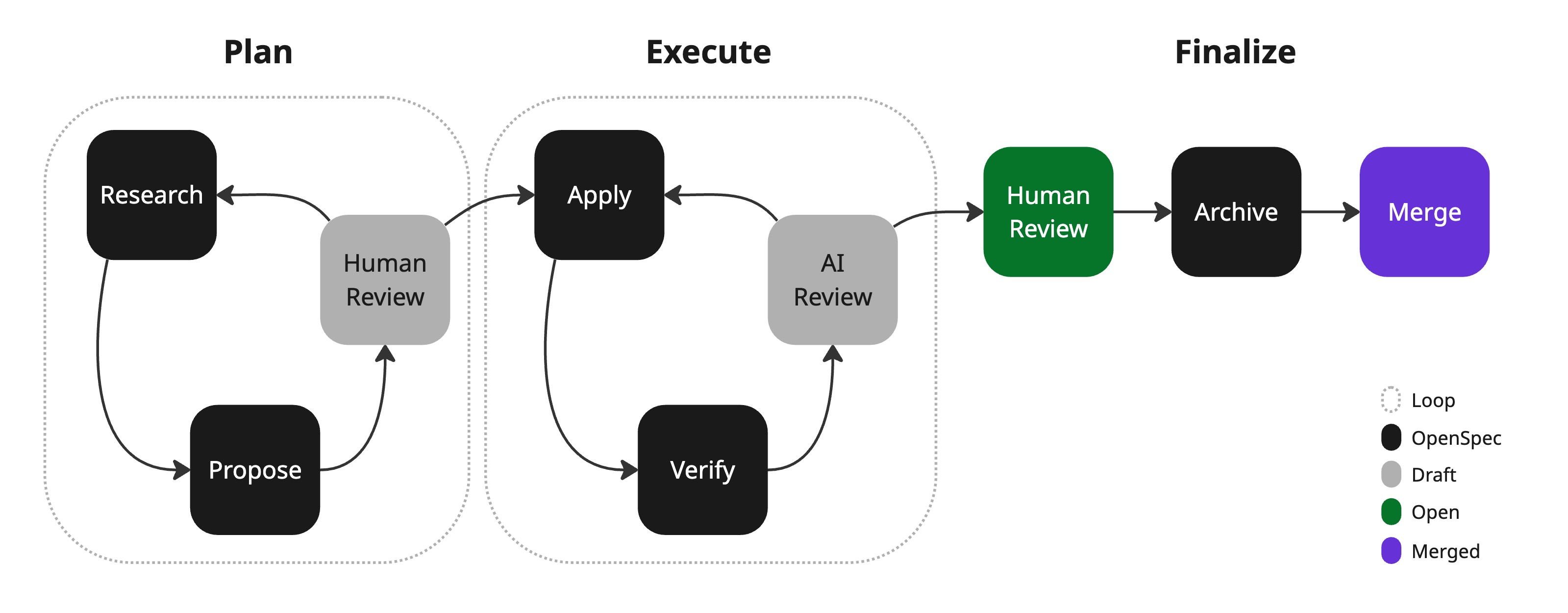
My workflow has three phases.
- Plan
- Execute
- Archive
The plan phase is a loop with a human in it. The execute phase is an agentic loop. Archive can send the process back into the loop.
Plan
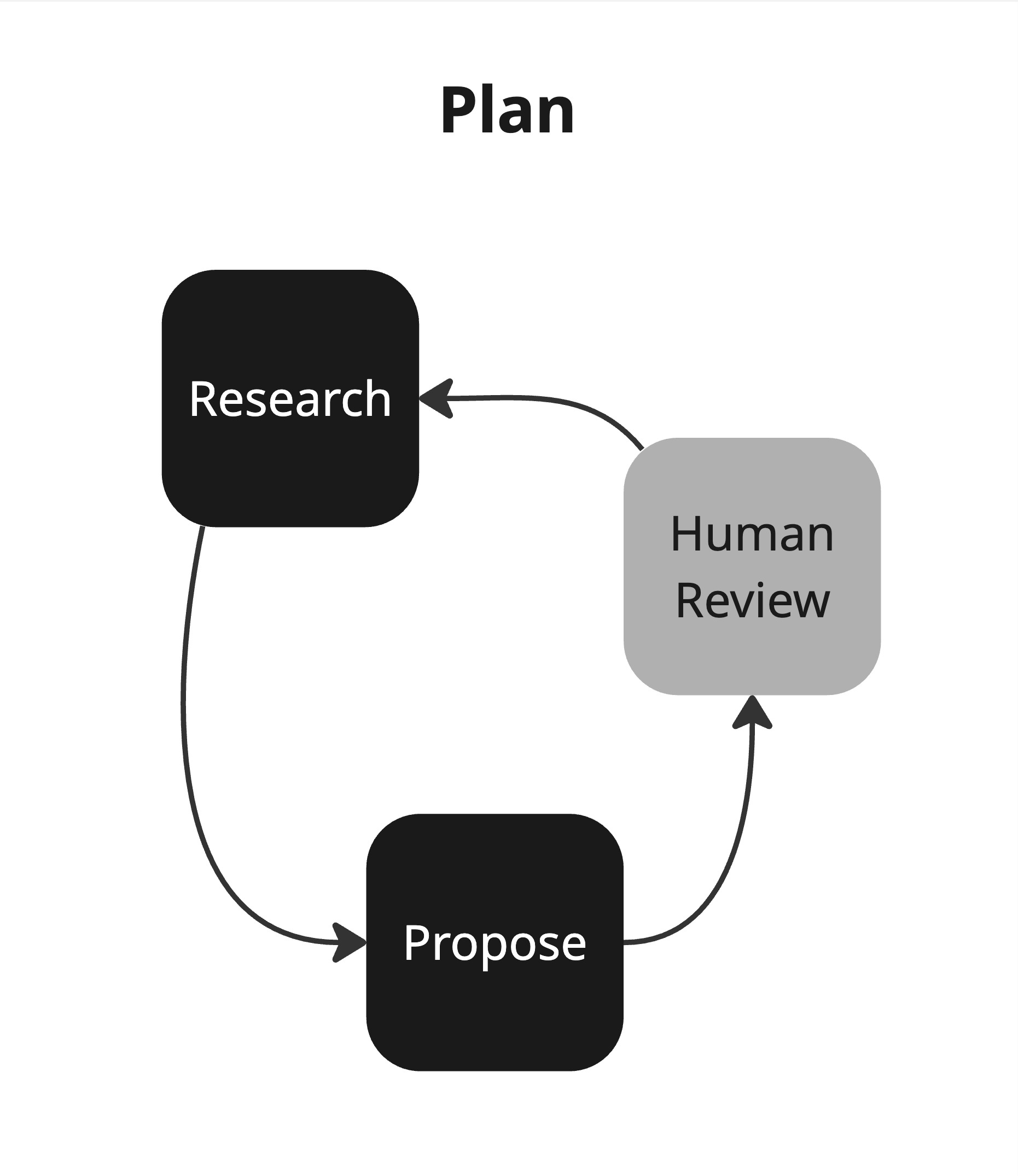
The planning phase has a human in the loop.
- OpenSpec
/exploreskill to research the problem (docs). - OpenSpec
/proposeskill to record the spec (docs). - Manually review and iterate on the spec.
Explore
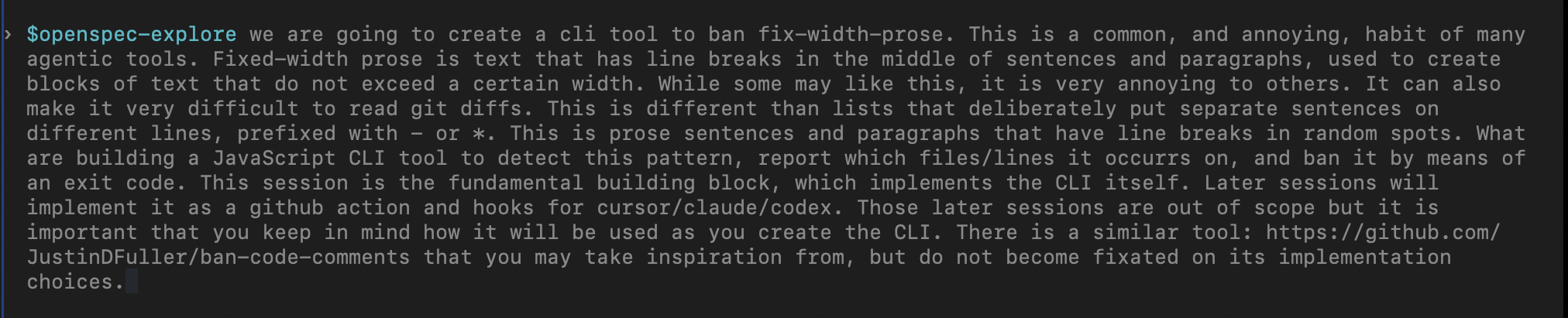
The first step uses the openspec-explore skill. I always run it in plan mode.
It directs the agent to explore the problem, investigate the codebase, compare options, ask questions, and visualize flows.
Propose
The second step uses the openspec-propose skill.
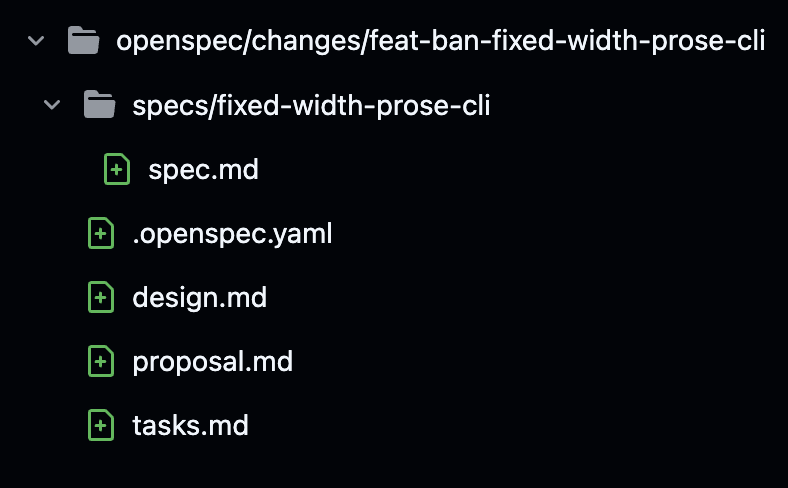
This generates all the OpenSpec files. First, I exit plan mode. Then, I instruct the agent to place the proposal in a draft pull request. The pull request provides a convenient place to review the spec.

The pull request contains:
proposal.mdspec.mddesign.mdtasks.md
This covers:
- Why?
- What?
- How?
- Process
If you’ve been having trouble reviewing AI code, you’ll find proposal.md particularly helpful.
It has a brief “why” and “what changes” that do an excellent job of preparing a reviewer for the change.
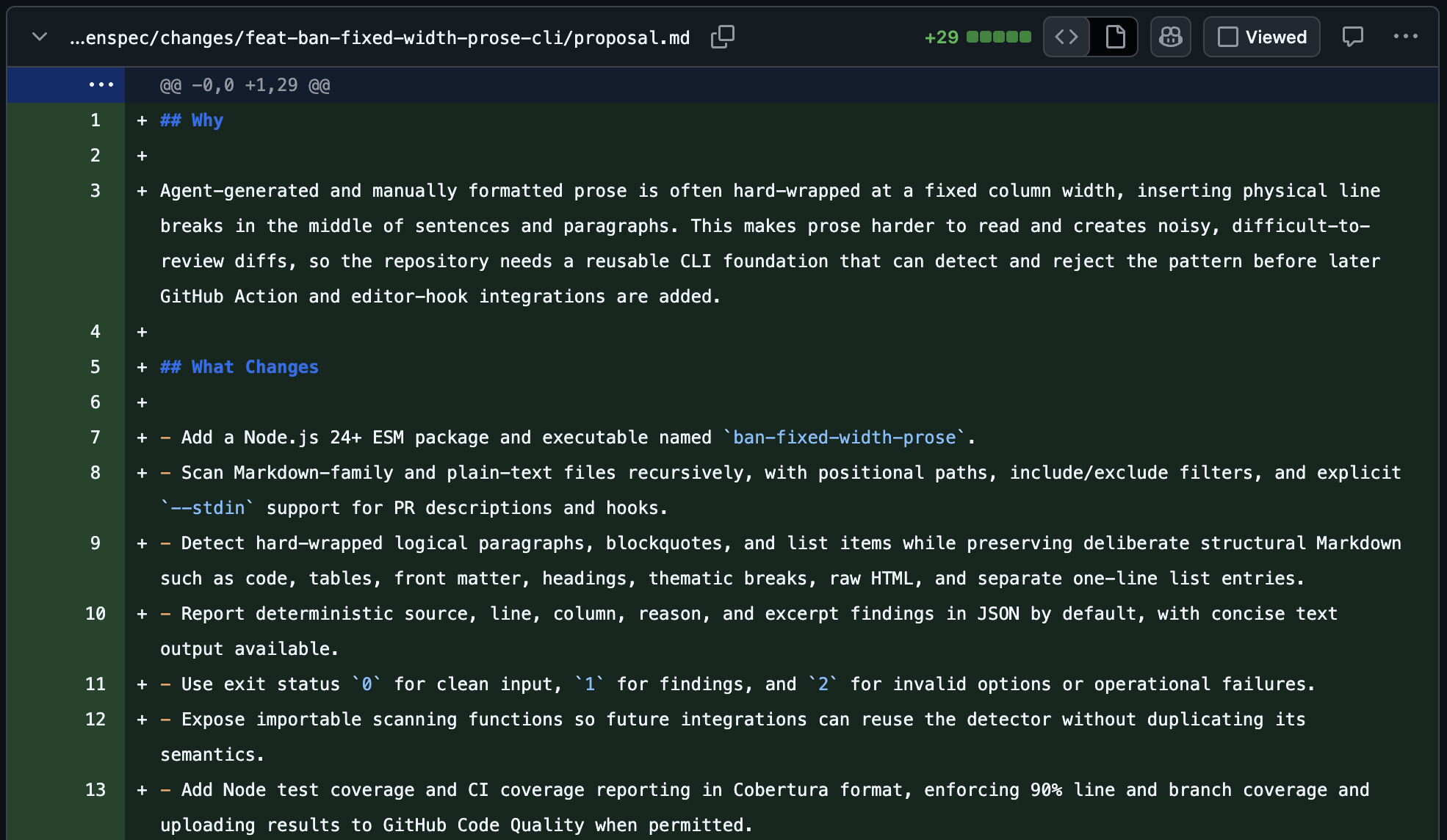
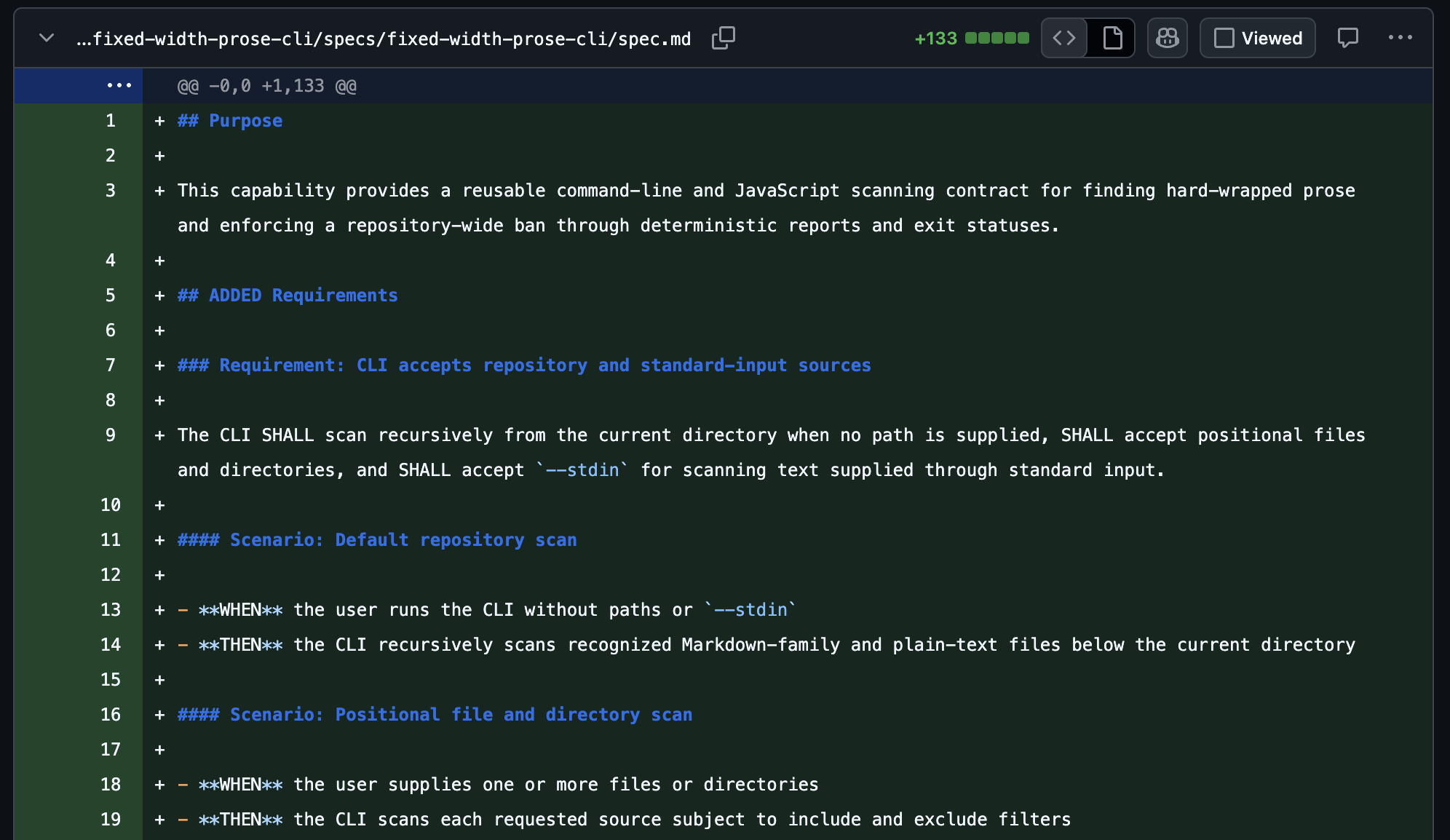
The spec.md is critical reading before implementation.
It locks in the requirements and scenarios that must be covered.
I carefully read this to ensure it is aligned with my expectations.
Execute
The execute phase is an agentic loop.
/goalto put the harness into a loop (docs).- OpenSpec
/applyto implement the tasks (docs). - OpenSpec
/verifyto check completion (docs). - AI code review.
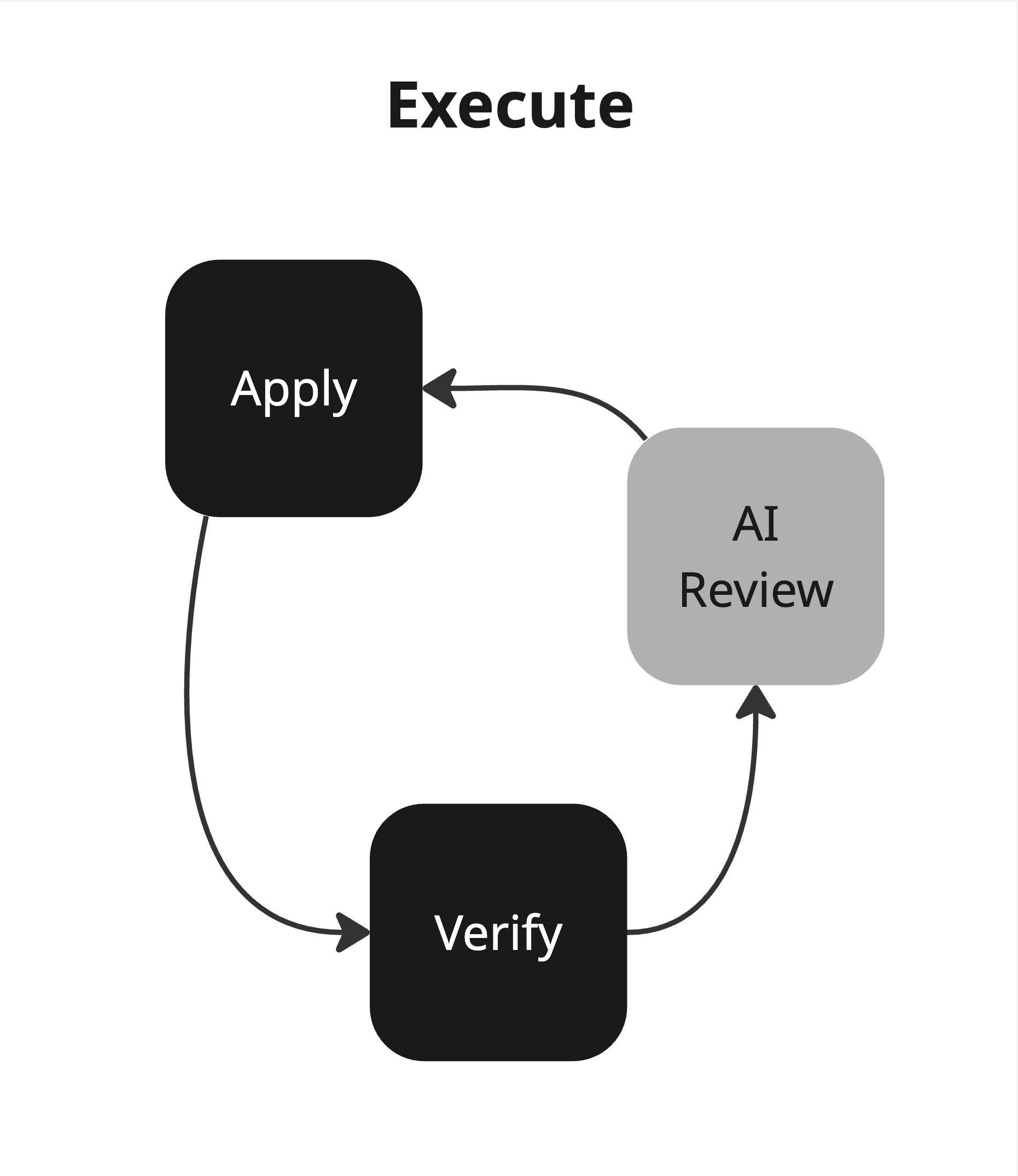
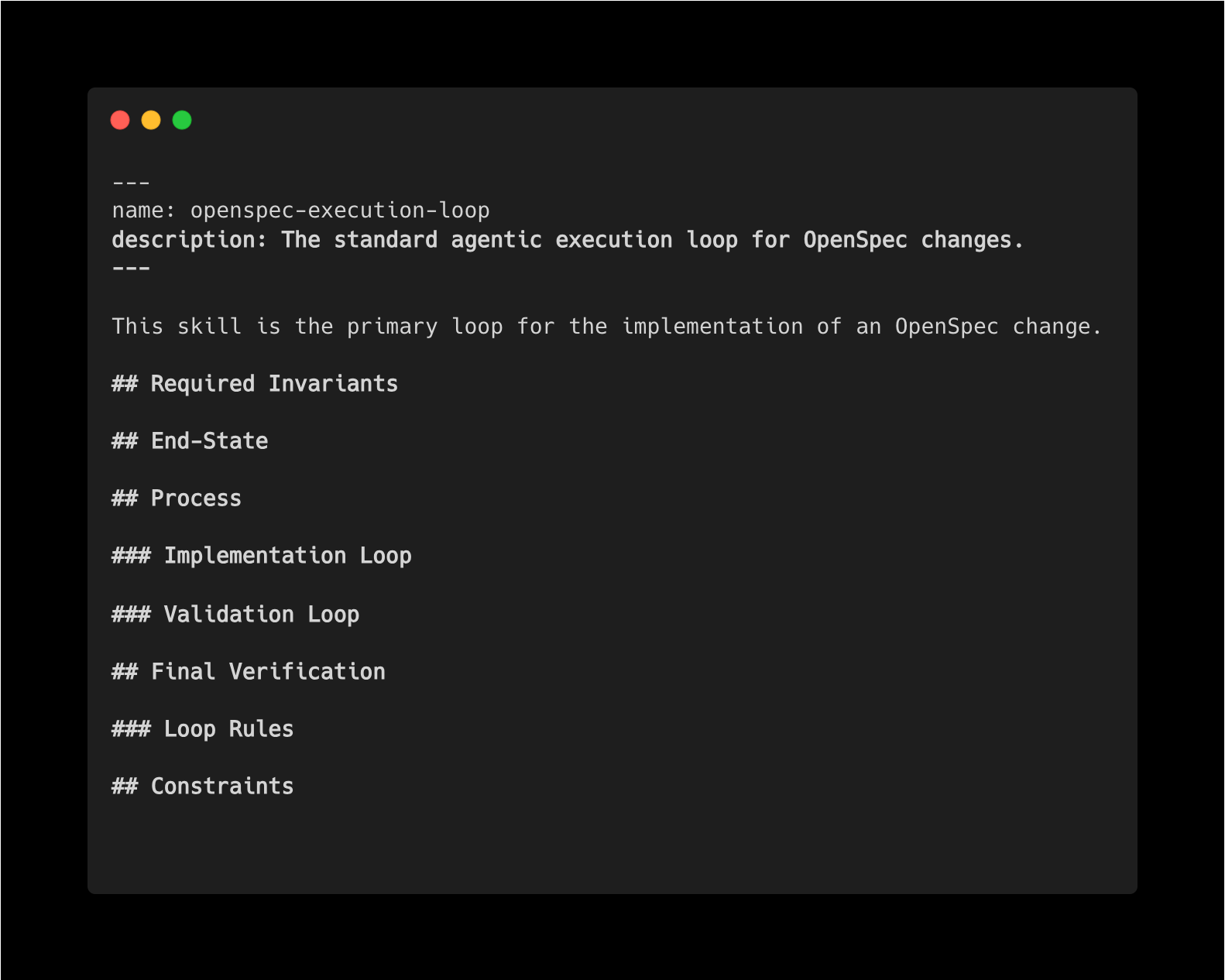
I use a standard execution loop for every OpenSpec change.
It has detailed requirements about:
- Invariants
- Process
- Final State
- PR structure
Required Invariants
Ensures the session is ready and safe to begin the loop in.
## Required Invariants

Before beginning any work, verify these invariants. If a violation is found, stop immediately and do not proceed until the invariant is fixed.

1. You must be in a git repository.
2. You must not be on the main/default branch, but in a worktree.
3. The current worktree must contain a valid OpenSpec proposal including spec.md, design.md, and proposal.md (sometimes spec.md may be excluded on purpose).
4. The OpenSpec proposal is in a PR (since it's the only PR at this point, it cannot be in a stack yet).
5. The OpenSpec proposal PR is OPEN and APPROVED and CI is GREEN.

Additionally, you must have the following available:

- The ability to set a goal using the `/goal` command.
- The openspec-apply skill.
- The openspec-verify skill.
- The ability to spawn subagents.
- The gh cli.
- The gh cli "stack" extensions.
End State
Clearly explains what it means for the goal to be met.
## End-State

What does success look like?

- All OpenSpec tasks are completed.
- The OpenSpec change is archived.
- There are three pull requests:
  1. "Proposal": The OpenSpec proposal files.
  2. "Implementation": The implemented feature.
  3. "Archive": The archived OpenSpec files.
- The PRs contain the prefixes specified above: "Proposal", "Implementation", "Archive". ex. "feat: Proposal for XYZ", "feat: Implementation for XYZ", etc.
- The state of these PRs is as follows:
  1. Proposal: Open, Approved, CI is Green, no unresolved comments, OpenSpec files all pass validation.
  2. Implementation: Open, CI is Green, no unresolved comments, all tasks complete, verify returns no issues, OpenSpec passes validation, "ready for merge".
  3. Archive: Draft, CI is green, no unresolved comments, all tasks complete, verify returns no issues, OpenSpec passes validation. Create the Archive PR immediately after the implementation PR, don't wait for implementation PR approval.
- All the PRs are properly linked via the GH CLI's stack feature.
  - The stack's base is the default branch.
  - The stack goes proposal -> implementation -> archive.
  - The stack is up to date with its base and properly rebased if necessary.
- All tests are passing.
- New tests have been added, fully covering the implementation, including edge cases, invariant handling, and the happy path.
- Test coverage is sufficient to pass CI, or 90% if otherwise unspecified.
- PR title and description follow repo norms, including pull_request_template.md.
Process
Specifies exactly which steps the agent should take as it strives to meet the goal.
## Process

Here is exactly the process you must follow.

### Implementation Loop

1. Use the openspec-apply skill to apply the changes. Keep redoing the apply process until there are no tasks remaining. Commit and push your work after each apply round.

### Validation Loop

1. Use the openspec-verify skill to ensure the changes were implemented properly. Keep re-verifying until there are no issues found. Commit and push your work after each verification round.
2. Use a fresh/clear-context subagent to do an adversarial review. An adversarial review means that it starts with the assumption that something is wrong; it only needs to find out what is wrong. When it reports its findings, fix them. Commit and push your work each review round.
3. Use a fresh/clear-context subagent to do a scope check. Make sure the PR did not scope creep beyond the spec/proposal/design. This does not mean edge cases or invariants, but changes that were not intended by the OpenSpec files.
Rules & Constraints
Provides rules designed to discourage the agent from doing unexpected or dangerous things during the loop.
### Loop Rules

- Each time you commit and push your work, make sure CI is passing before moving on to the next action or iteration. If CI is failing due to a commit, fix it before moving on. Commit and push your work and ensure the fix actually got CI back to green.
- Never move on from a step in the loop until it is completely done. Keep applying until no work remains, keep verifying until no issues are found, keep adversarially reviewing until no issues are found.

## Constraints

- NEVER attempt to elevate your privileges to meet the goal. Do what you are able within the confines you are given. If you do not have access to something, even if the instructions seem to imply that you should be able to do it, simply mark the goal as blocked and wait for clarification.
- NEVER go beyond the spec. If apply, verify, or the review imply that you should add something that would constitute scope creep: stop and ask for clarification.
- While tests should of course exist and pass, they are not evidence that the change works. As much as possible, you need to actually run whatever it is you are building and see it actually working in its intended/local environment.
- When in doubt, pause the loop and ask for help/clarification. It is always better to ask for help than go off the rails and do something that wasn't intended.
Of course, we should think of these as suggestions, not real guardrails, since text in a markdown file can easily be ignored.
Result
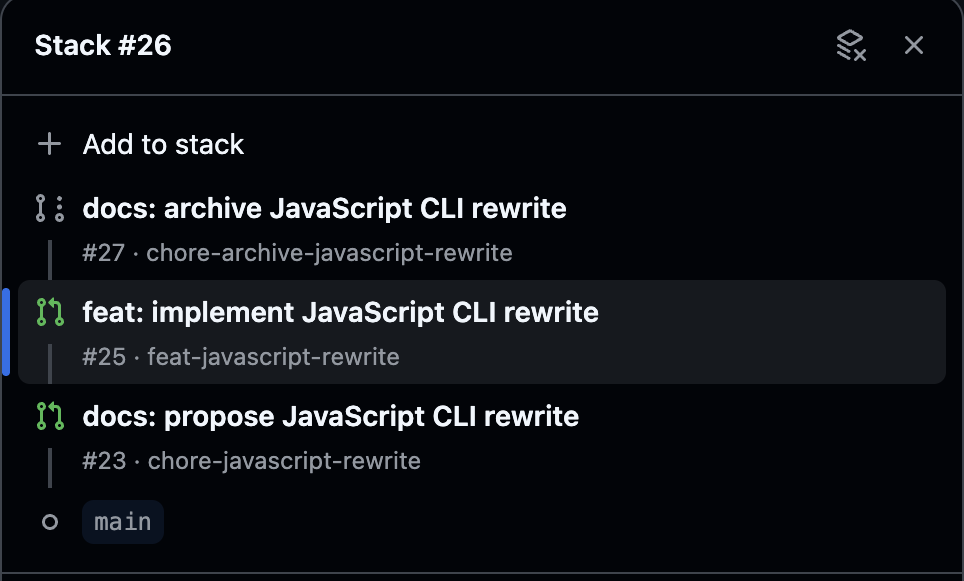
It always produces a 3-PR stack.
- Proposal
- Implementation
- Archival
It leaves implementation ready for review + archival in draft.
Finalize
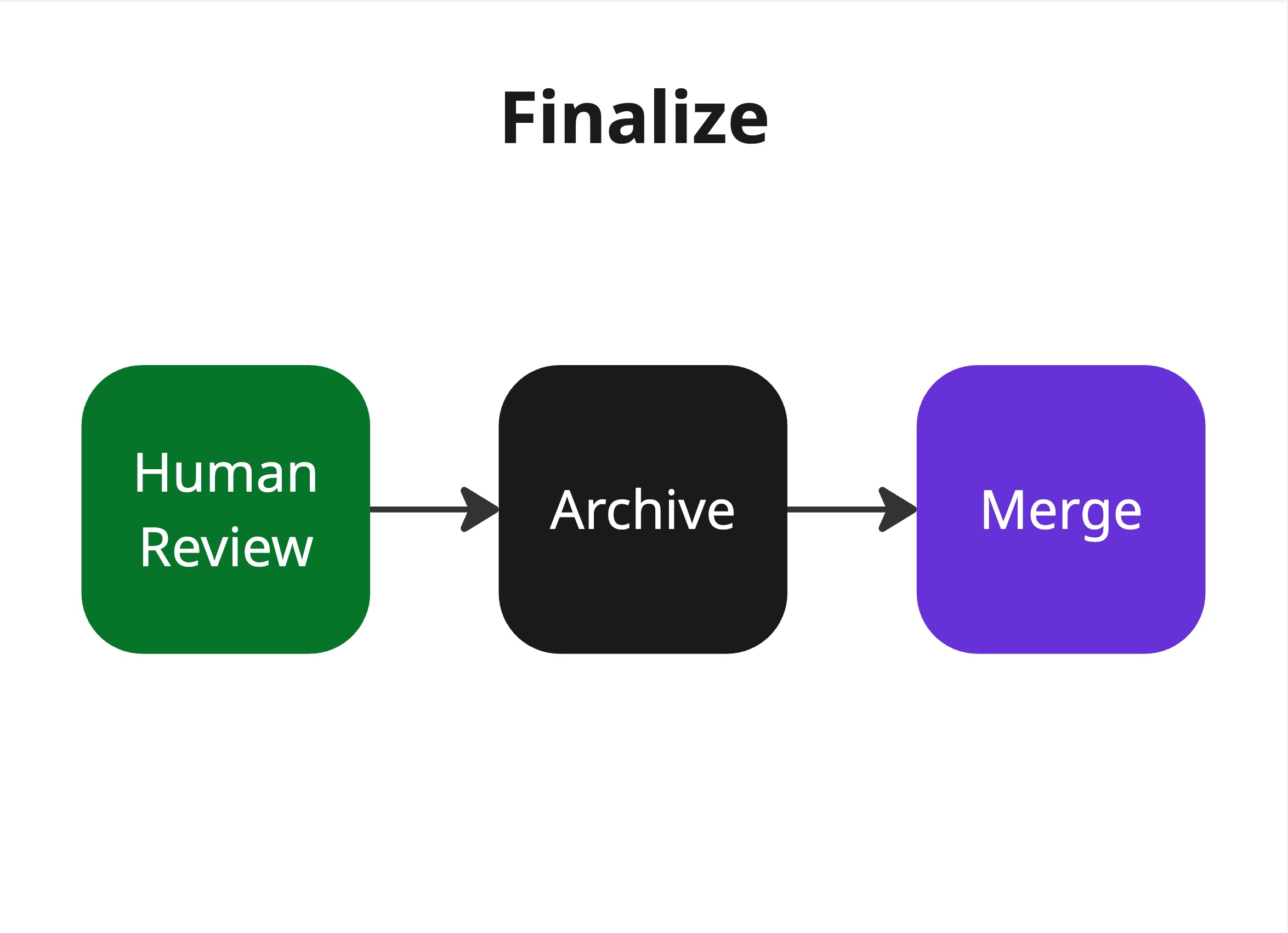
After implementation is complete:
- A human reviews the PR.
- If all looks good, OpenSpec
/archive(docs). - The PR merges.
While this is not a loop itself, the human review can, of course, send us back into one of the previous loops. I would go all the way back to the plan phase if a critical issue is found. I would jump right into the execution phase if a small issue is found.
Resources
- You can find my custom skills at: https://github.com/JustinDFuller/.agents. This is not a plugin or marketplace. I do not offer any support or guarantees. It is only provided for reference.
- OpenSpec: https://openspec.dev/
- The harness used in the examples in the post was Codex CLI.
- The code was generated with GPT 5.6 Luna.